Events

netECR World Suicide Prevention Day 2019

10th of September is World Suicide Prevention Day (WSPD) and many of our netECR members have come together to provide new blog posts covering a range of topics related to suicide and self-harm. The articles present a wide collection of views, experiences, and perspectives on suicide and self-harm including themes around research, lived experiences, suicide… Continue reading netECR World Suicide Prevention Day 2019

Interviews

Interview: Career advice from Siobhan O’Neill

Siobhan O’Neill is a Professor of Mental Health Sciences at Ulster University. Her current research programmes focus on trauma and suicidal behaviour in Northern Ireland, novel interventions for mental health and suicidal behaviour. Siobhan has expertise in qualitative and quantitative (epidemiology and survey) research methods. What are your main research interests? I am really interested… Continue reading Interview: Career advice from Siobhan O’Neill

Suicide Prevention

The importance of remembering weight in suicide prevention

By Valerie Douglas Often, when one thinks of the words “discrimination” or “stigmatization” our mind will wander to identity groups who when we hear in the news about the systematic and overt discrimination they face makes us want to tweet, “What century do we live in, again???”. Western society has, overall, come to agree that… Continue reading The importance of remembering weight in suicide prevention

Journal Club Notes

“These Things Don’t Work.” Young People’s Views on Harm Minimization Strategies as a Proxy for Self Harm

On Wednesday, 28th August 2019 we had our monthly online journal club session and we discussed the paper “These Things Don’t Work.” Young People’s Views on Harm Minimization Strategies as a Proxy for Self-Harm: A Mixed Methods Approachethics” by Ruth Wadman, Emma Nielsen, Linda O’Raw, Katherine Brown, A. Jess Williams, Kapil Sayal & Ellen Townsend.… Continue reading “These Things Don’t Work.” Young People’s Views on Harm Minimization Strategies as a Proxy for Self Harm

Opportunities

Research Associate for PSTRC Greater Manchester -Mental Health Services

The NIHR Patient Safety Translational Research Centre Greater Manchester seeks a full-time Research Associate for a fixed term contract, starting from 1st September 2019 until 31 July 2022. Funding is available to undertake this post on a full-time basis, but job-share or part-time working applications would be welcome. This post will be appointed in the… Continue reading Research Associate for PSTRC Greater Manchester -Mental Health Services

Research

Do Harm Minimisation Techniques Really Help Young People Who Self-harm?

By Katherine Brown Harm minimisation and self-harm ‘Harm minimisation’ approaches aim to reduce the damage that happens when someone engages in behaviour that could negatively affect their health [1]. Although the approach has its origins in the field of substance misuse [2], it has since been used in other areas - including the treatment of… Continue reading Do Harm Minimisation Techniques Really Help Young People Who Self-harm?

Lived Experience

What’s okay to say? The acceptability of language used to talk about suicide

By Emma Nielsen Language: the source of much debate Talking matters; we want people to be having helpful, open and compassionate conversations about suicide. A central aspect of supporting this is developing a comprehensive, clear and evidence-based understanding of what language people find acceptable, and what is not acceptable, when doing the talking. Here, it… Continue reading What’s okay to say? The acceptability of language used to talk about suicide

Events

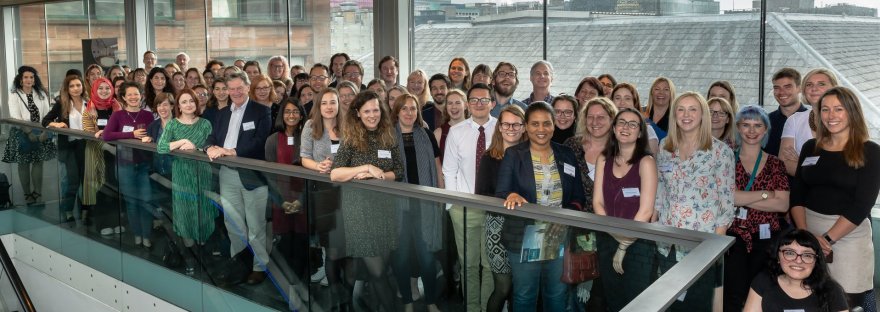
Reflections on the 4th Early and Mid-Career Researchers’ Forum, Glasgow, 2019

By Hilary Causer I arrived in Glasgow with rain lashing against the windows of the train, a familiar knot of worry in my chest and google maps open on my phone. This was my first visit to the city and my first EMCRF. It offered the opportunity to meet a whole host of people who… Continue reading Reflections on the 4th Early and Mid-Career Researchers’ Forum, Glasgow, 2019

Events

Conference Review: 4th Suicide and Self-harm Early and Mid-Career Researchers’ Forum

By James Jopling, Executive Director for Samaritans Scotland. I must admit, I arrived at the 4th Suicide and Self-Harm Early and Mid-Career Researchers Forum in Glasgow with some trepidation. Although I have worked for Samaritans for nearly four years, this was my first meaningful foray into the world of suicide and self-harm research. Many of… Continue reading Conference Review: 4th Suicide and Self-harm Early and Mid-Career Researchers’ Forum

Academia

Lessons learnt in the quest for meaningful and effective patient and public involvement

By Donna Littlewood  Today I am giving a talk on Patient and Public involvement at the Suicide and Self-Harm Early and Mid-Career Researchers’ Forum (#EMCRF19) in Glasgow. This blog is the virtual version of that talk - but with links to relevant resources and a few added extras that I could not include in the… Continue reading Lessons learnt in the quest for meaningful and effective patient and public involvement

Research

Advice on involving people with experiential knowledge in suicide and self-harm research.

By Donna Littlewood on behalf of members from the PPI group - Mutual Support for Mental Health The following responses were provided by members of ‘Mutual Support for Mental Health’ the lived experience advisory panel for the Centre for Mental Health and Safety at the University of Manchester. What are the key things you would… Continue reading Advice on involving people with experiential knowledge in suicide and self-harm research.

Suicide Prevention

International Day Against Homophobia, Biphobia, Interphobia and Transphobia (IDAHOBIT)

By Hazel Marzetti Today is the International Day Against Homophobia, Biphobia, Interphobia and Transphobia (IDAHOBIT). IDAHOBIT happens every year on the 17th of May and provides an opportunity for people (LGBTI people and our allies) who feel able, to stand visibly against discrimination and harassment faced by LGBTI people. Does that really happen anymore? One… Continue reading International Day Against Homophobia, Biphobia, Interphobia and Transphobia (IDAHOBIT)

Journal Club Notes

Self-harm in older adults: systematic review

On Wednesday 27th March at 12pm (GMT) we held our monthly online journal club session to discuss a recent systematic review, which focused on “Self-harm in older adults: systematic review” led by our netECR member, M. Isabela Troya and colleagues . Here are some notes from thoughts shared in our discussion, kindly summarised by Donna… Continue reading Self-harm in older adults: systematic review

Uncategorized

Session 6: Data Hubs and Platforms

By Rebecca Musgrove and Lana Bojanić. Big data and suicide and self-harm prevention Professor Ann John, Swansea University. Prof John talked about the potential and challenges of using big data and routine records in suicide and self-harm research.  In particular she highlighted the SAIL databank which provides data linkage to a number of datasets across… Continue reading Session 6: Data Hubs and Platforms

Uncategorized

Session 5: High Risk Groups

By Rebecca Musgrove and Lana Bojanić. Financial difficulty and suicide: data from frontline staff in commercial debt collection firms Dr Chris Fitch & Jamie Evans, Personal Finance Research Centre, University of Bristol. Dr Fitch’s ‘non-health’ angle focused on the presentation of suicidality to the frontline staff of commercial debt collection firms.  They found that a… Continue reading Session 5: High Risk Groups

Uncategorized

Session 4: Healthcare Context

By Rebecca Musgrove and Lana Bojanić. Hospital and community presentations for self-harm: linking across datasets Prof Nav Kapur, University of Manchester. Prof Kapur focused on the importance of data linkage between primary and secondary datasets and mortality records. This presentation related to those who were hospitalised due to the self-harm, identified as an important group… Continue reading Session 4: Healthcare Context

Uncategorized

Session 3: Registered Suicides

By Rebecca Musgrove and Lana Bojanić. Suicide Registrations Data Dr Ben Windsor-Shellard, Office for National Statistics (ONS). Dr Windsor-Shellard pointed out that possible inconsistency in the ONS data can stem from the registration delay between date of death and date of registration of death (i.e. 152 days on average in England) and recent changes in… Continue reading Session 3: Registered Suicides

Uncategorized

Session 2: General Population and Cohort Surveys

By Rebecca Musgrove and Lana Bojanić. Self-harm trends and risk factors using adult general population surveys (AMPS) Sally McManus, National Centre for Social Research. Sally McManus discussed the new NatCen report – “Suicide and Self-Harm in Britain – researching risk and resilience” which uses a range of cross-sectional data sources gathered from 1993 onwards. Sally’s… Continue reading Session 2: General Population and Cohort Surveys

Uncategorized

Session 1: Context and Aims

By Rebecca Musgrove and Lana Bojanić. Suicide Prevention Strategies: Data Needs and Data Gaps Prof Louis Appleby, University of Manchester. Prof Appleby summarised the key aims of the National Suicide Prevention Strategy, in particular looking at “high risk” groups as well as other specific groups within the general population that may need targeted intervention. He… Continue reading Session 1: Context and Aims

Events

Conference Review: Using Data to Inform Suicide and Self-harm Prevention

By Rebecca Musgrove and Lana Bojanić. A number of netECR members attended the National Centre for Social Research (NatCen) and NIHR sponsored “Using data to inform suicide and self-harm prevention” at the Royal Statistical Society in London on Monday 25th February 2019. This was the first in a series of events to celebrate the 50th… Continue reading Conference Review: Using Data to Inform Suicide and Self-harm Prevention